


Archives | Contact Us | Columbian Publishing Company | e-Edition | Mobile | Place an Ad | RSS | Subscribe

    Digg Stumble Upon  Reddit  twitter    del.icio.us

Local News

Fighting for fish


Camas man’s methods to restore salmon unconventional, effective

Sunday, November 23 | 12:51 a.m.

BY ERIK ROBINSON
COLUMBIAN STAFF WRITER


Tony Meyer is restoring salmon habitat one logjam at time. Since quitting his job as a phone company lineman eight years ago, Meyer has engineered dozens of projects such as this one on Mason Creek in north Clark County. (Photos by N. SCOTT TIMBLE/The Columbian)


N. SCOTT TRIMBLE/The Columbian Tony Meyer is restoring salmon habitat one logjam at time. Since quitting his job as a phone company lineman eight years ago, Meyer has engineered dozens of projects such as this one on Mason Creek in north Clark County.


The Lower Columbia Fish Enhancement Group, directed by Tony Meyer for the past decade, is among several engaging in habitat improvement projects across the Northwest. The payoff is visible here in salmon powering up the East Fork of the Lewis River to spawn.

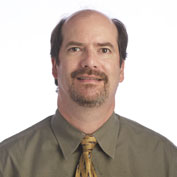
Tony Meyer stepped gingerly along the Washougal River, angling toward the spot he’s engineered to attract salmon.

“I ran away from the game warden many times right here,” he said, adding he was 12 years old at the time and fishing after dark.

Meyer, a phone company lineman by trade and fisherman by choice, now spends his days figuring out how to restore the fish he spent his youth trying to catch.

In the 10 years since he became director of the Lower Columbia Fish Enhancement Group, Meyer has planned, fought for and executed dozens of stream restoration projects across Southwest Washington.

To do it, he exhibits all the subtlety of the pile drivers he employs to create habitat.

Meyer’s projects have sometimes raised eyebrows among some neighbors who worry that his approach might create more harm than good. But state and federal regulators have grown to trust in Meyer’s results, even going so far as to grant him a universal permit under the Endangered Species Act to do what he believes needs to be done.

Even Meyer sometimes marvels over his position, especially measured against competing sponsors with college degrees and advanced training.

“I’m a high school graduate, and that’s it,” he said.

The 44-year-old father of two has come a long way since evading the game warden as a kid. He quit his job as a lineman in 2001, and now works full-time as the group’s executive director.

“It’s a heck of a lot more satisfying than putting in telephone lines,” he said.

As a case in point, Meyer takes particular pride in reshaping the Washougal near its confluence with the Columbia.

Huge debris jams, including one nearly the length of a football field, create fish-friendly riffles on one side and deep pools on the other. Excavators have reshaped a nearby gravel quarry, turning an environmental liability into off-channel habitat for salmon. And thousands of trees have been planted along the banks.

Fishery biologists credit Meyer for his tenacity and innovation.

“He’s really good at getting projects done,” said Steve Manlow, regional habitat biologist for the Washington Department of Fish and Wildlife.

Meyer, who lives in Camas, emphasizes that, by anchoring debris dams in creeks, he’s doing nothing more than simulating natural features wiped out by a century of dredging, diking and various man-made revisions to the environment. He employs a sort of environmental jujitsu to improve habitat, installing debris dams during low-flow periods in the summer and relying on the energy of floods to scour pools and spread gravel during the winter.

“We work with watershed processes, rather than trying to make it do what we want it to do,” he said. “That’s a good quote, by the way.”

Manlow, who previously served as habitat planning coordinator for the Lower Columbia Fish Recovery Board, which dispenses grant funding for stream improvement projects, credits Meyer for cultivating connections with landowners and contractors to maximize bang for the buck.

“He can make a dollar go a long way,” Manlow said.

At a time when numerous organizations are all vying for a finite pool of money to improve habitat, Meyer’s approach has proven to be a winning formula for cost-conscious grant managers.

The enhancement group, one of 14 statewide, operates off a base level of about $125,000 in federal and state funding.

But the organization has earned another $1 million annually in grants over the past few years to install specific stream restoration projects on Columbia tributaries from Skamania County to the coast. Add on the value of donated materials, labor and state inmate work crews, and Meyer figures he’s doubled the program’s value.


Go-to guy

For Vancouver contractor Mike Watters, Meyer’s approach has been good for business.

Watters has become Meyer’s go-to guy for most of his in-stream rehabilitation projects. Watters, a retired dairy farmer, is adept at finding extra woody material from other jobs and his equipment is ideally suited for the task.

“Nobody else is into pile driving,” Watters said.

Indeed, the lowly pile driver may be Meyer’s secret weapon in restoring habitat. The practice evolved from Meyer’s career as a lineman, relying on a series of large vertical posts jammed deep into the riverbed.

“He doesn’t mind going out and pushing the limits of trying to figure out how to get something done,” Watters said.

Last month, an inmate work crew from the state’s Larch Corrections Center used 1-inch bolts to affix crosshatching logs at the head of a small island on the Washougal. Juvenile salmon can use the small spaces within this latticework of debris to evade predators, he said.

Over the long term, he expects the vertical posts will be buried by debris as the river adjusts.

“You have natural templates to work off of,” Meyer said. “Almost any island with an alluvial channel has a logjam at its face.”

Over the really long term, biologists hope more restrictive land-use rules will pay off with a recurring supply of wood debris. Forests in the upper Washougal River, for example, are only now recovering from the huge Yacolt Burn a century ago, followed by intensive logging in subsequent years.

Logjams in creeks only go so far, Manlow said.

“It’s got to be coupled with other approaches,” Manlow said. “The whole upper Washougal is getting back up to an age where you’re going to see natural recruitment. (Meyer’s) addition is a stopgap measure until those forests are contributing wood themselves.”


Cliffhanger

Not everyone is enamored with Meyer’s approach.

Daina McLean, who lives on Mason Creek in north Clark County, raised concern when she saw Meyer and his contractor mucking around in the dry creek bed this past summer. She said she’s concerned with Meyer’s back-of-the-envelope approach to planning his projects.

“It’s cost-efficient, but is it going to be effective long-term?” she asked. “I don’t know.”

During a visit to the site last month, Meyer didn’t dispute his fast-track approach.

“We did this in a day,” he said. “We designed, permitted it and built it in about a two-week period.”

Meyer said the project was a straightforward example of using root wads to redirect the energy of the creek, but the urgency was apparent in an eroding cliff rising 100 feet.

“The landowner’s freaking out because his house is about 50 feet back of that cliff,” Meyer said.

The landowner in this case turns out to be Chuck Cushman, well known nationally as an advocate of property rights. Cushman said his problem began in 1996, when floodwaters flowing underneath an ill-designed county bridge began to erode the bank below his house.

Clark Public Utilities, which does habitat restoration work, temporarily stabilized the bank with sheeting that gave way a few years ago.

Cushman, meanwhile, said he had been trying to work with the local nonprofit organization Fish First to engineer a permanent fix to the eroding streambank.

Richard Dyrland, a retired Forest Service hydrologist who serves on the Fish First board of directors, said the organization was twice turned down for grants to stabilize the creek. Dyrland declined to comment on Meyer’s resolution to the cliffbank erosion along Mason Creek.

“We do not get involved in talking about other people’s projects,” he said.

Whatever the differences in approach, Cushman turned to Meyer at the suggestion of Dean Sutherland, environmental resources manager for Clark Public Utilities. Once again using Watters as the contractor, Meyer installed three large root wads anchored by pilings. Cushman paid $6,000, and Clark Public Utilities contributed the huge double-stemmed root wads worth an estimated $5,000 in value.

Cushman, who has lived in the area since 1989, said he’s impressed with Meyer’s work.

“The thing about Tony seemed to be, the issue was always the fish and the creek,” Cushman said. “It was irrelevant what my politics were.”

Erik Robinson: 360-735-4551, erik.robinson@columbian.com.


Copyright 2009 columbian.com. All rights reserved. Use of this site constitutes acceptance of our user agreement.